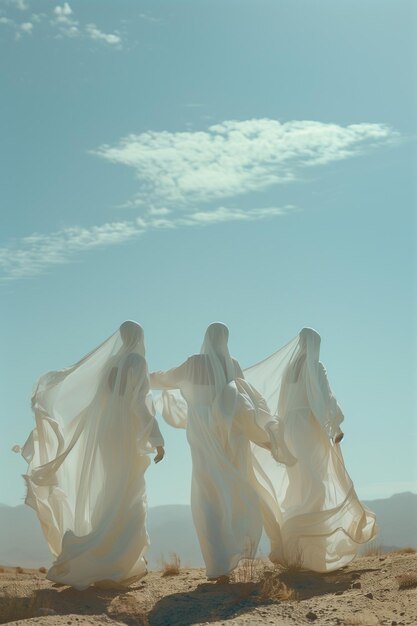
The stark beauty of a windswept dune meeting the vast, indifferent ocean once existed solely in nature’s most remote corners and the vivid imagination of artists. Today, the Visual Aesthetics of AI-Generated Coastal Deserts are not just a burgeoning field in digital art; they're a breathtaking new frontier, offering creators an unprecedented palette to explore isolation, grandeur, and resilience through synthetic landscapes. This isn't just about rendering pixels; it's about AI learning the very soul of these arid coastlines and presenting them in ways that challenge our perception of reality and possibility.
At a Glance: AI's Arid Coastal Canvas
- Defining a New Genre: AI is mastering the unique visual language of coastal deserts, blending arid and oceanic elements.
- Aesthetic Drivers: Expect hyper-realistic textures, dramatic lighting, and diverse styles from cyberpunk to painterly.
- Powerful Tools: Platforms like CGDream and Reelmind.ai offer advanced features for control over composition, style, and emotional impact.
- Beyond Imagery: These AI-generated visuals are revolutionizing filmmaking, game development, VR experiences, and marketing.
- Human Touch Remains Key: "Human-in-the-Loop" modes ensure artists guide the AI, making creative intent paramount.
Beyond the Horizon: What are AI-Generated Coastal Deserts?
Imagine a landscape where an ancient, cracked earth meets the relentless surf, where salt-encrusted rocks stand sentinel against a hazy horizon, and where the sparse, resilient flora of a desert ecosystem gives way to marine life. This isn't just a geographical anomaly; it's the rich, often paradoxical, visual tapestry of coastal deserts.
Traditionally, capturing such a scene required arduous expeditions or immense artistic skill. Now, advanced text-to-image models are bringing these landscapes to life on demand. When we talk about the visual aesthetics of AI-generated coastal deserts, we're delving into how algorithms interpret, combine, and synthesize the elements of both an arid biome and a marine environment. It's about AI understanding the unique interplay of sand and sea, the effects of coastal erosion, the specific color palettes, and the sense of desolate grandeur inherent to these places. The result? Stunning, often hyper-realistic, sometimes surreal, images that resonate with profound emotional depth.
The Art of Arid Beauty: Deconstructing AI's Coastal Visions
What makes an AI-generated coastal desert compelling? It's a symphony of elements that AI platforms meticulously orchestrate, drawing from vast datasets of real-world imagery and artistic interpretations.
Elements of AI's Unique Palette
AI's ability to render these specific environments goes beyond just "desert" or "coast." It can pinpoint and fuse critical visual cues:
- Dune Formations Meeting Water: Observe how algorithms create the delicate ripple patterns of sand extending to the waterline, or the dramatic contrast of a towering dune overlooking a crashing wave.
- Resilient Flora and Fauna: AI can populate these scenes with adapted cacti, succulents, or even ghost-like marine birds, adding a layer of authenticity and life to the desolation.
- Coastal Rock Formations: Look for the weathered cliffs, sea stacks, and salt flats that define many coastal deserts, rendered with incredible textural detail.
- Atmospheric Effects: AI excels at generating the hazy, often ethereal quality of sea mist mingling with desert heat, or the dramatic chiaroscuro of a coastal desert night sky, complete with celestial bodies.
- Water Dynamics: From serene, reflective pools to turbulent, foam-laced waves, the AI captures the dynamic nature of the ocean in proximity to the land.
Emotional Resonance: Vastness, Isolation, and Hope
The visual power of these environments often evokes strong feelings. AI doesn't just mimic reality; it amplifies these inherent emotional qualities:
- Isolation and Solitude: The vast, empty expanses of sand and sea create a profound sense of aloneness, beautifully captured by AI through wide shots and singular focal points.
- Vastness and Scale: The sheer immensity of these landscapes, stretching to an unending horizon, is something AI renders with breathtaking fidelity, often dwarfing human-made elements if present.
- Resilience and Endurance: The sparse life, the weathered rocks, and the persistent waves all speak to an enduring quality. AI can highlight this through dramatic lighting and textured details that emphasize survival.
- Mystique and Otherworldliness: The unusual juxtaposition of desert and ocean can feel alien, making these AI creations perfect for fantastical or sci-fi narratives.
Color and Light Play: Sculpting Atmosphere
Color and light are the emotional architects of any visual. AI platforms leverage sophisticated tools to fine-tune these aspects. Reelmind.ai's "Mood Enhancer" filter, for example, allows creators to precisely adjust lighting and color schemes. You can shift a scene from the harsh, bleached whites and searing blues of midday to the warm, elongated shadows and fiery oranges of a desert sunset over the ocean, or even to the cool, ethereal blues and purples of a moonlit coastal expanse. This ability to instantly recalibrate the atmosphere fundamentally alters the narrative and emotional impact of an image, turning a neutral scene into one brimming with drama, tranquility, or suspense.
Texture and Detail: The Illusion of Reality
For a visual to truly immerse, detail is paramount. AI models are now capable of rendering textures with astonishing verisimilitude. Platforms like CGDream utilize features like LoRA Styles to inject fine, specific details – think the intricate patterns on a desert rose, the granular quality of wind-blown sand, or the subtle reflections on wet rock. When combined with 2K and 4K Image Upscalers, the clarity and sharpness of these details become almost indistinguishable from high-resolution photography. This meticulous attention to texture and definition is what transforms a generated image from a mere representation into a visually tangible experience, inviting the viewer to feel the grit of the sand or the cool spray of the ocean.
From Prompt to Panorama: How AI Crafts These Worlds
The magic of AI-generated coastal deserts isn't truly magic; it's the product of sophisticated algorithms and user-friendly interfaces. Understanding the underlying technology helps you wield its power more effectively.
Text-to-Image Foundation: The Generative Core
At the heart of this creative explosion are advanced text-to-image models like Flux (used by CGDream) and Stable Diffusion 3.5 (a cornerstone for Reelmind.ai). You, the creator, provide a text prompt – a description of your desired scene, perhaps "a hyper-realistic coastal desert at dusk, with giant cacti silhouetted against a crimson sky, ocean waves crashing gently." The AI then draws upon its vast training data, comprising billions of images and their corresponding descriptions, to synthesize a unique visual interpretation of your words. It’s like having an impossibly fast, infinitely learned artist at your command, translating your conceptual vision into a concrete image in seconds.
Precision and Control: Guiding the AI's Hand
Early AI art was often a "black box" – you gave a prompt, and you got what you got. Modern platforms offer unparalleled control. Reelmind.ai, for instance, emphasizes multi-scene consistency, crucial for projects requiring a cohesive visual narrative across multiple images or frames. This means if you're generating a series of images showing the evolution of a AI-generated desert coast landscape over time or from different angles, the AI maintains a consistent style, lighting, and environmental integrity, preventing jarring visual inconsistencies. Additionally, tools like ControlNet (available on CGDream) allow for precise structural and compositional control, letting you dictate the layout, perspective, and arrangement of elements within your scene, moving beyond mere descriptive prompts to true directorial input.
Style Transfer & Creative Freedom: A Spectrum of Aesthetics
One of the most exciting aspects is the ability to dictate not just what appears in the scene, but how it appears. Style transfer capabilities allow you to transform a hyper-realistic desert coast into something entirely different. Imagine a coastal desert rendered in a gritty, neon-soaked cyberpunk aesthetic, or perhaps a soft, impressionistic painterly abstraction. Reelmind.ai excels here, enabling creators to experiment with diverse stylistic approaches, effectively turning your AI into a master of various artistic schools. This flexibility empowers artists to push boundaries, blend genres, and create truly unique visual experiences that would be incredibly time-consuming, if not impossible, to achieve through traditional means.
The "Human-in-the-Loop" Factor: Emphasizing Artistic Intent
Despite the power of AI, the human artist remains indispensable. Reelmind.ai's "Human-in-the-Loop" mode is a testament to this, allowing creators to manually refine every frame or image. This feature is particularly valuable when generating complex sequences or when a specific artistic vision demands meticulous detail that even the most advanced AI can't perfectly intuit. It ensures that the AI serves as a powerful co-creator, augmenting your capabilities, rather than an autonomous replacement. Your judgment, aesthetic preferences, and creative intent are amplified, not diminished, by these tools.
Beyond Static Images: Dynamic Storytelling with Coastal Deserts
The visual aesthetics of AI-generated coastal deserts aren't confined to standalone images. They are powerful assets transforming entire industries, enabling dynamic storytelling and immersive experiences that were once cost-prohibitive or technically challenging.
Filmmaking: Crafting Epic Narratives
Imagine a post-apocalyptic film set against an endless coastal desert. AI can generate detailed storyboards, pre-visualizations, or even full scenes with astounding consistency. Directors can explore different environmental looks, lighting conditions, and camera angles for these harsh yet beautiful backdrops, all before a single frame is shot on location. The "Temporal Coherence Engine" offered by Reelmind.ai ensures that elements like weather patterns, sand shifts, or the passage of time evolve logically across frames, making for believable, dynamic environments in narratives that demand consistency across an entire film.
Game Development: Infinite, Immersive Worlds
For open-world games, populating vast landscapes with unique biomes is a monumental task. AI-generated coastal deserts provide a solution. Game developers can generate infinite variations of these environments, ensuring players constantly encounter fresh, engaging scenery. This accelerates asset creation, allowing design teams to focus on gameplay mechanics and narrative, while the AI handles the heavy lifting of environmental generation, from distant horizons to intricate foreground details like scattered rocks and hardy shrubs.
Virtual Reality: Crafting Immersive Experiences
Imagine strapping on a VR headset and instantly being transported to a hyper-realistic coastal desert, feeling the vastness, hearing the distant waves, and seeing the play of light on the dunes. AI can craft these immersive experiences for VR tourism, education, or even therapeutic applications. By generating detailed 3D environments or high-resolution 360-degree panoramas, AI makes "visiting" a remote coastal desert accessible to anyone, anywhere. It opens up new avenues for virtual exploration and engagement with some of Earth's most unique and inspiring landscapes.
Marketing & Branding: Evoking Resilience and Wonder
For brands seeking to convey messages of resilience, endurance, natural beauty, or exploration, AI-generated coastal desert visuals offer striking marketing assets. A sportswear brand might use an image of a lone figure running across an infinite sandy beach where the desert meets the sea, evoking strength and determination. These visuals are ideal for advertising, website headers, or social media campaigns, instantly capturing attention and communicating powerful brand narratives with unique, high-quality imagery that stands out in a crowded digital landscape.
Mastering Your AI Canvas: Practical Tips for Creators
Now that you understand the power of AI in rendering these captivating landscapes, let's look at how you can leverage these tools effectively to bring your own visions to life.
Leveraging Advanced Features for Precision and Polish
Don't just use basic text prompts. Dive into the advanced functionalities offered by platforms like CGDream and Reelmind.ai:
- LoRA Styles: Experiment with these to add specific, intricate details to your desert elements—be it the texture of a cactus or the precise pattern of wind-blown sand.
- 2K and 4K Image Upscalers: Always run your final output through these. They are crucial for enhancing clarity and sharpness, especially if your images are intended for large prints, high-resolution screens, or detailed integration into other media.
- Mood Enhancer: Play with this filter to sculpt the emotional tone of your scene. A slight shift in color temperature or light intensity can dramatically alter whether your coastal desert feels bleak, serene, or adventurous.
- Temporal Coherence Engine: If you're generating sequences or animations, this is your secret weapon for ensuring logical evolution of elements across frames, providing seamless transitions and believable environmental changes.
- ControlNet: For specific compositions, use ControlNet to sketch out your desired layout, ensuring the AI places key elements precisely where you want them.
Training Your Own Aesthetic: Niche Datasets and Monetization
Feeling restricted by general models? Many platforms, including Reelmind.ai, allow users to train AI on niche datasets. If you have a specific artistic style, a collection of unique desert photos, or a particular vision of a coastal desert you want the AI to emulate, you can feed it your own data. This creates a personalized model that reflects your unique aesthetic. Even better, platforms with a "Model Marketplace" empower you to monetize these user-trained models, selling access to your specialized AI creations to a wider community of artists and developers. This fosters a vibrant ecosystem where creators can both consume and contribute to the evolution of AI art.
Batch Processing & Workflow Efficiency: Saving Time, Expanding Creativity
Manual work can be a bottleneck. Utilize tools like "Quick-Style Transfer" and batch-processing features to streamline your workflow. Need to apply a specific style (e.g., "desert noir") to 50 different generated coastal desert variations? Batch processing allows you to do it in one go, freeing up your time for more creative ideation and refinement. This efficiency is critical when working on large projects, allowing you to iterate rapidly and explore a wider range of artistic possibilities.
Community & Collaboration: Learn, Share, Remix
The AI art space is incredibly dynamic and collaborative. Engage with community features for discussion and model remixing. Learn from others' prompts, share your creations, and even take existing models or styles and remix them to create something new. This collaborative environment is a fantastic resource for overcoming creative blocks, discovering new techniques, and pushing the boundaries of what's possible with AI-generated art.
Common Questions About AI-Generated Coastal Deserts
Are these visuals truly "art"?
Absolutely. While the tools are algorithmic, the intent, curation, and refinement are human. The artist chooses the prompt, selects the model, steers the aesthetics, and refines the output. The AI acts as a powerful brush or camera, but the vision and creative direction come from the human artist. It's a new medium, not a replacement for artistry.
How do they differ from real photographs of coastal deserts?
AI-generated images can replicate the realism of photographs, but they offer unparalleled creative freedom. They can fuse elements that don't exist in reality (e.g., a specific type of alien flora in a Namibian coastal desert), explore impossible lighting scenarios, or maintain perfect multi-scene consistency that would be challenging to achieve with photography. The key difference is that AI allows for the creation of imagined realities with photographic fidelity, whereas photography captures existing realities.
What are the ethical considerations of using AI-generated art?
The primary concerns revolve around copyright, attribution, and the origin of the training data. While platforms work to address these, creators should be mindful of originality, ensuring their work is transformative rather than merely replicating existing art. Always be transparent about the use of AI, and respect intellectual property rights. The field is evolving rapidly, and responsible creation is paramount.
Your Next Creative Expedition with AI
The visual aesthetics of AI-generated coastal deserts represent more than just a technological feat; they embody a philosophical shift in how we conceive and create art. They challenge us to reconsider the boundaries between natural and artificial, inspiring us to explore narratives of solitude, resilience, and boundless beauty in barren lands.
As a creator, you now hold the keys to landscapes that once existed only in dreams. Whether you're a filmmaker, a game developer, a marketer, or simply an enthusiast, the potential to craft stunning, emotionally resonant coastal desert scenes is at your fingertips. So, experiment. Push the boundaries. Train your own models. And most importantly, tell your stories through these captivating, AI-forged vistas. The coastal desert awaits your creative footprint.