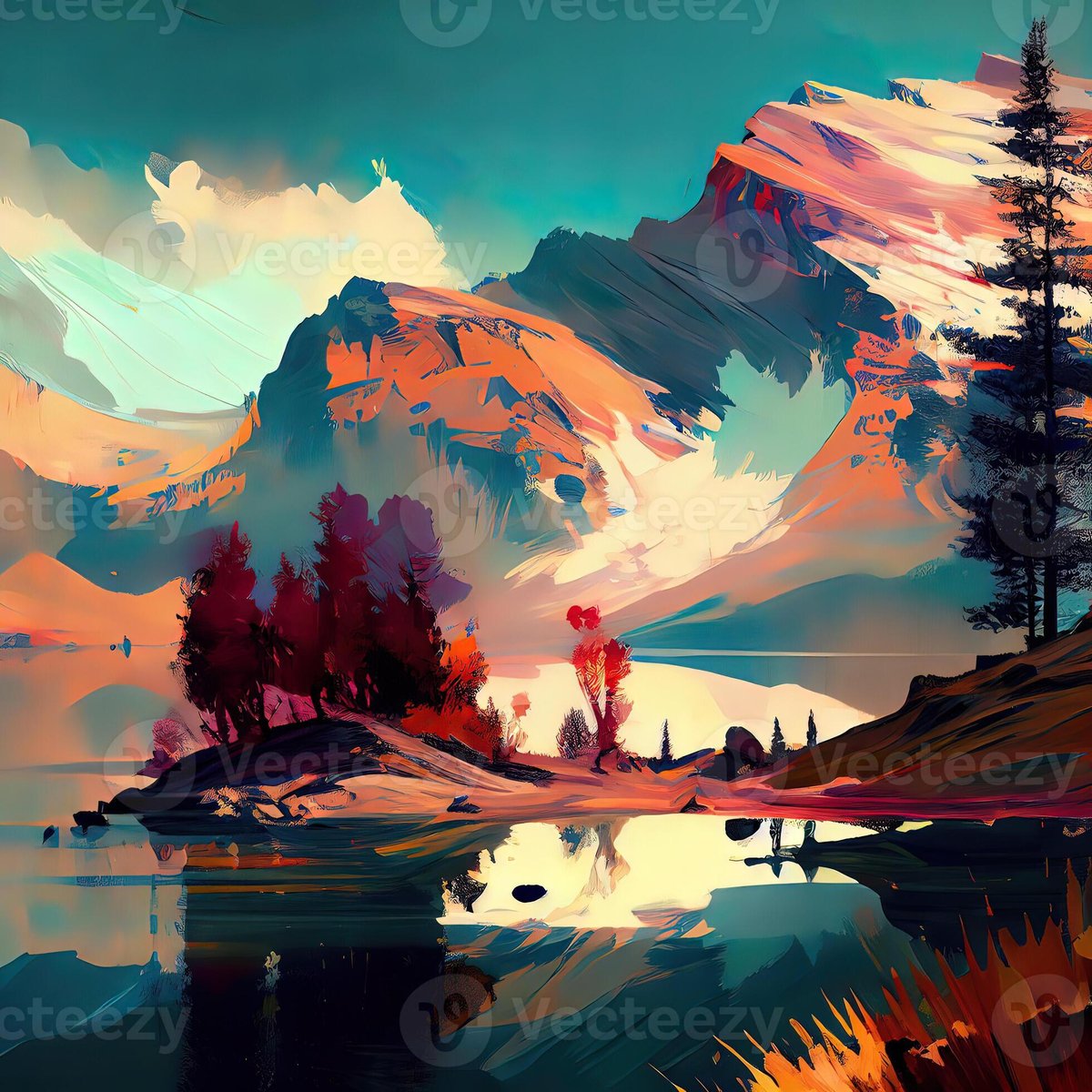
The world of design is undergoing a seismic shift, and nowhere is this more evident than in landscape creation. Gone are the days of painstakingly rendering every tree, rock, and ripple by hand. Today, Top AI Art Generators for Landscape Creation are transforming vague concepts into vivid, scalable worlds in mere moments, slashing production times by 60-80% for everyone from architects to game developers.
These aren't just fancy filters; they're sophisticated generative AI systems that simplify incredibly complex tasks. Imagine translating a mental image of a sprawling fantasy realm or a photorealistic urban park into a tangible, editable design in minutes, not weeks. That's the power AI brings to your fingertips, making professional-grade landscape design accessible whether you're a seasoned expert or just starting your creative journey.
At a Glance: What You'll Discover
- The AI Advantage: How these tools dramatically cut design time and democratize creativity.
- How They Work: A quick dive into the brains behind the digital magic.
- Choosing Your Tool: Key criteria to match the right AI generator to your specific project needs.
- Top Generators Reviewed: A curated list of the best AI landscape tools for every vision, from game development to architectural visualization and artistic expression.
- Pro Tips: Best practices for generating unique and stunning AI landscapes.
- FAQs: Answers to common questions about commercial use, skill level, and hardware.
The Landscape Revolution: Why AI is a Game-Changer
Forget the traditional bottlenecks of design. The arrival of AI landscape generators has ushered in an era where imagination is the only real limit. These tools aren't just making existing workflows faster; they're fundamentally changing how we approach design, making it more fluid, experimental, and efficient than ever before.
For professionals, the impact is immense. A 2024 Design Tools Report highlighted how these generative AI systems are drastically cutting production time by 60-80%. This means architects can iterate through dozens of site plans in the time it once took for one, and game developers can prototype vast open worlds in hours instead of months. For enthusiasts, it's a gateway to creating scenes they once only dreamed of, without needing years of software mastery.
The Unseen Architect: How AI Builds Worlds
At its core, an AI landscape generator operates with a blend of learned knowledge and guided creativity. Think of it in two phases:
- Training: The AI models are fed colossal datasets—billions of image-text pairs from the real world and various artistic styles. Through this "learning," they internalize the intricate concepts of objects (trees, mountains, rivers), light (sunsets, shadows), style (watercolor, cyberpunk), and spatial relationships (how a mountain meets a valley) in countless landscapes. It's like giving an apprentice artist an encyclopedia of every landscape ever imagined.
- Generation: When you provide a text prompt (e.g., "a serene mountain lake at sunrise, surrounded by pine forests, in a watercolor style"), the AI takes this guidance. It starts with random noise and, through an iterative process called a diffusion model, gradually refines that noise. Each step brings it closer to an image that matches your described scene, generating the digital world before your eyes.
Beyond the Horizon: The Core Benefits
The advantages of integrating AI into your landscape design workflow are profound and far-reaching:
- Speed & Precision: These tools can reduce design time by 80% or more compared to traditional software like Blender. This allows for rapid prototyping of multiple design variants in minutes or hours instead of weeks, accelerating concept development and client presentations.
- Democratization of Design: You don't need years of formal training in CAD or 3D modeling. AI empowers users without specialized skills to create professional-grade landscapes, making design accessible to a much broader audience.
- Enhanced Creativity: AI amplifies your imagination. It allows for fearless experimentation with unique or complex ideas—think floating islands, biodiverse sustainable parks, or alien topographies—that might be too time-consuming or difficult to conceptualize manually.
- Cost Efficiency: Many AI tools offer free tiers or affordable subscriptions, significantly cutting pre-production costs. The 2024 Game Dev Budget Report indicates savings of up to 60% for small teams by leveraging AI for initial landscape concepts.
- Collaborative & Editable Outputs: AI-generated landscapes aren't static images. They're often highly editable, allowing you to tweak elements like seasons, lighting, or textures with ease. Many can be exported to popular game engines like Unity and Unreal or refined to high resolutions (4K, 8K, or even 32K) for pristine visual quality.
Navigating the Digital Terrain: How to Choose Your AI Landscape Generator
With so many powerful AI landscape generators available, the real challenge often lies in selecting the right one for your specific needs. It's like picking the perfect tool from a well-stocked shed – each has its specialized function. Consider these key factors to guide your decision.
Mapping Your Needs: Project Scope & Vision
Before you even open a browser, ask yourself: What am I trying to achieve? Are you aiming for a quick concept sketch for a personal project, a production-ready 3D asset for a video game, a hyper-realistic architectural visualization, or perhaps an entire urban plan? The best tool for an AI-generated desert coast might be entirely different from the ideal solution for a futuristic city. Matching the tool's core capabilities to your specific requirements is paramount.
The User-Friendly Path: Interface & Learning Curve
Some tools are designed for instant gratification with intuitive sliders and presets, perfect for beginners or quick mock-ups. Others offer deep customization and granular control, requiring a steeper learning curve but yielding professional-grade results. Consider how much time you're willing to invest in learning a new interface versus how quickly you need to start generating.
Artistry vs. Accuracy: Output Style & Customization
Do you need highly stylized outputs with specific artistic filters (e.g., watercolor, cyberpunk), or is photorealistic precision with accurate lighting and textures your priority? Some generators excel at abstract art, while others are built for real-world accuracy, offering features like geo-accurate shadows or PBR material generation. Look into the customization options for styles, resolutions, and post-processing.
Beyond the Basics: Specialized Features & Integrations
Think about what extras might streamline your workflow. Do you need batch processing to generate multiple variants quickly? Collaborative modes for team projects? Direct exports to game engines (Unity, Unreal) or 3D formats (OBJ, FBX)? What about features like solar/wind analysis for urban planning, or point cloud support for real-world data conversion? These specialized functionalities can make a significant difference.
Counting the Costs: Budget & Accessibility
Many AI landscape generators offer free tiers, which are excellent for experimentation. However, advanced features, higher resolutions, or increased generation quotas often come with subscription costs. Also, consider accessibility: are the tools entirely web-based, or do they require powerful local hardware (especially for 3D generation and rendering)?
Your Guide to the Top AI Landscape Generators for Every Vision
Let's dive into the specifics, exploring the standout AI landscape generators available today. We've assessed these tools based on their unique strengths, features, and target audiences to help you find your perfect match.
For Rapid Prototyping & Game Dev
When speed and iterative design are your top priorities, especially in game development or concept art, these tools shine.
- Perchance AI Landscape Generator:
This free, web-based tool is a dream for rapid prototyping. With a zero-learning curve, you can instantly generate landscapes using intuitive sliders for terrain, weather, and foliage. It offers over 20 instant fantasy templates and requires no account. Perfect for quick concept art or game dev brainstorming, exporting 1080p PNGs. - CGDream AI Landscape Generator:
Built for serious production, CGDream is tailored for AAA game studios. It offers direct game engine exports (Unity/Unreal) complete with displacement maps and PBR textures. You'll find biome-specific foliage, 4K-8K texture packs, and procedural history for non-destructive editing. Features like wind simulation and an LOD generator make it incredibly robust, reducing terrain production time by 35% for teams like Ubisoft. - Leonardo AI:
A powerhouse for creative freedom, Leonardo AI is built on Stable Diffusion and boasts 50+ pre-trained or community-tuned models. It offers prompt enhancement and 3D texture generation, striking an excellent balance between artistic flair and realism. While versatile, its strong focus on asset creation makes it highly valuable for game artists.
For Artistic Flair & Stylized Scenes
If your goal is to create visually stunning, artistically driven landscapes that evoke a particular mood or aesthetic, these generators are your canvas.
- Recraft AI Landscape Generator:
Recraft excels in stylized landscapes, offering 15+ art styles from watercolor to cyberpunk. Its layer-aware processing preserves detail, and features like batch processing and 4K resolution boosts ensure high-quality output. There's a free tier (20 monthly generations) and a collaboration mode, making it ideal for artists and architects wanting a unique look. - Midjourney:
Renowned for its cinematic and artistic landscapes, Midjourney consistently delivers high aesthetic quality. Its V7 model optimizes lighting and composition for near-cinematic results, making it a favorite for concept artists and visual storytellers. While its Discord interface has a low operational threshold, its artistic output is consistently high. - Dream by WOMBO:
This mobile-first (iOS/Android) tool is fantastic for quick, stylized creations. Integrating DALL·E 3 and Stable Diffusion, it offers 25+ built-in art styles and one-click generation of four image types. It's perfect for social media content or design inspiration on the go. - Fotor AI Landscape Generator:
A beginner-friendly entry point, Fotor offers "1-Click Wonder" templates and social-first design features. With 50+ themed templates, social media presets, a trend color engine, and AI object insertion, it’s great for quick, visually appealing landscapes. It also includes 5GB free cloud storage and team sharing options, with users achieving 3x higher social engagement with its designs.
For Photorealism & Architectural Precision
When your project demands hyper-realistic visuals, precise lighting, and a focus on architectural context, these tools deliver.
- Phot.ai:
This tool is a game-changer for hyper-realistic architectural presentations. Its LightGen AI offers 50+ dynamic lighting presets, and you can achieve geo-accurate shadows by inputting GPS and date data. With 4K/8K exports, PBR material generation, an interior mode, and a client collaboration portal, it's designed for professional architectural visualization. One firm reported saving 12 hours per project using Phot.ai. - Adobe Firefly:
Integrated within the Adobe Creative Cloud ecosystem, Firefly is perfect for professional and commercial projects. Its Firefly Image 5 core model excels at text-to-image generation, producing accurate material textures and spatial proportions. It supports custom style models for brand identity, making it suitable for high-end residential and commercial projects that require seamless integration with other Adobe tools. - DALL·E 3 (via ChatGPT):
Integrated directly into ChatGPT, DALL·E 3 allows for the creation of complex and narrative-rich scenes through conversational interaction. You can describe intricate details and have a real-time dialogue to fine-tune your landscape, making it incredibly powerful for intricate scene composition with realistic elements.
For 3D Modeling & Geological Accuracy
When your landscapes need to be more than just images—when they need to be dimensionally accurate, editable 3D terrains��these tools are essential.
- Vondy AI Landscape Generator:
Vondy excels at converting real-world photos into editable 3D terrains. Its photo-to-3D conversion generates UV-mapped models, complete with geology presets and texture isolation. With OBJ/FBX exports, scale calibration, and point cloud support, it's invaluable for projects requiring geological accuracy. Its AI cleanup feature can even remove modern artifacts from historical photos, reducing site survey costs by 40%.
For Urban Planning & Analytics
For city planners, developers, and environmental designers, these tools offer generative design capabilities coupled with crucial real-world analytics.
- Neighborbrite:
Neighborbrite is a powerful tool for urban planning. It offers generative design capabilities alongside real-world analytics such as solar/wind analysis (increasing passive solar heating by 22% in some projects), traffic AI, zoning compliance (catching a potential $250k redesign cost in one instance), and accessibility scoring. Features like infrastructure planning, VR walkthroughs, and census integration make it a comprehensive solution for civic projects.
For Open-Source & Custom Control
For those who demand granular control over every aspect of their generation process and prefer an open-source approach, these options provide unparalleled flexibility.
- Stable Diffusion:
As an open-source model, Stable Diffusion offers extensive customization. It supports LoRA fine-tuning for custom models and ControlNet for precise layout control. This allows for a full balance between creative freedom and professional exactitude, making it ideal for reproducing specific details or integrating unique artistic styles.
For Commercial Use & Licensing
When commercial viability and legal licensing are non-negotiable, especially for business applications, these tools offer peace of mind.
- Generative AI by Getty Images:
Built on NVIDIA's Edify model (NVIDIA Picasso), this tool is specifically designed for fully licensed business and commercial applications. It produces 4K HD output with ultra-detail rendering, generating four images in just six seconds. It supports complex prompts (up to 250 characters), offers camera setting controls, and an AI extended canvas for wider backgrounds, ensuring commercially safe and high-quality assets.
All-in-One & Free Utilities
For general-purpose image enhancement, object manipulation, and quick visualizations, these tools provide broad utility.
- AVCLabs PhotoPro AI:
An all-in-one free tool for stunning designs, AVCLabs PhotoPro AI offers AI generation, object replacement, background removal, and color correction. It includes advanced AI models (Standard, HD, Ultra HD) and can enlarge images up to 4x without quality loss. It’s perfect for quick visualizations, like conceptualizing backyard ideas, without needing multiple specialized tools.
Unlocking Creativity: Best Practices for AI Landscape Generation
Generating a landscape is more than just typing a prompt. It's an iterative dance between your vision and the AI's capabilities. Here’s how to get the most out of these powerful tools:
Master the Prompt
Your prompt is your instruction manual for the AI. Be specific, descriptive, and evocative. Instead of "forest," try "dense, ancient redwood forest shrouded in mist, sunbeams piercing through the canopy, hyperrealistic, cinematic lighting." Use keywords for mood, time of day, weather, artistic style, and details. Experiment with negative prompts (e.g., "--no blurry, --no cartoon") to refine what you don't want.
Embrace Iteration
Don't expect perfection on the first try. Generate multiple variations of a prompt, tweak parameters, and refine your descriptions. Many tools offer "seeds" or "styles" to explore different creative directions. Treat each generation as a step towards your final vision.
Combine and Conquer
Some of the most stunning results come from a multi-tool approach. You might use Vondy for a geologically accurate base, then bring it into Recraft for a stylized overlay, and finally use an image upscaler like AVCLabs PhotoPro AI for high-resolution output. Each tool has its strength; leverage them strategically. You might also find it helpful to explore how AI generates specific, unique environments like a desert coast to understand the intricacies of combining elements.
Post-Process and Polish
AI-generated images are excellent starting points, but a touch of post-processing can elevate them. Use traditional photo editing software (like Photoshop or Lightroom) to adjust colors, contrast, add atmospheric effects, or composite additional elements. This final polish adds a human touch that often makes the difference between good and spectacular.
Your Questions Answered: AI Landscape Generator FAQs
Navigating the world of AI art can raise a lot of questions. Here are clear, concise answers to some common inquiries about AI landscape generators.
Which AI landscape generator is easiest for beginners?
For absolute beginners, Fotor AI (with its "1-Click Wonder" templates) and Perchance AI Landscape Generator (with its intuitive sliders and no account needed) are excellent starting points. They allow you to generate impressive results quickly without a steep learning curve.
Can I use these AI-generated landscapes for commercial purposes?
Most tools allow commercial use, but it's crucial to verify the individual generator's terms and conditions. Platforms like Generative AI by Getty Images are specifically designed and licensed for commercial applications, offering peace of mind. For other tools, you might need to modify outputs significantly or purchase specific licenses.
Do I need a powerful computer to use AI landscape generators?
For web-based tools like Perchance and Recraft, you typically don't need a powerful GPU, as the processing happens on their servers. However, if you're working with local installations of Stable Diffusion or generating complex 3D assets with tools like CGDream, a powerful graphics card will significantly speed up your workflow.
How can I make my AI-generated landscapes unique and not look generic?
To make your landscapes truly unique, focus on detailed and creative prompt engineering. Combine multiple tools (e.g., Vondy for a base, Recraft for style, AVCLabs for enhancement) and extensively tweak default settings. Incorporating specific architectural styles, unusual weather conditions, or fantastical elements that aren't commonly prompted can also help your creations stand out.
Which AI landscape generator is best for game engines like Unity or Unreal?
CGDream AI Landscape Generator is specifically designed for production-ready 3D assets for game studios, offering direct exports to Unity and Unreal with displacement maps, PBR textures, and biome-specific foliage. For more general asset creation, Leonardo AI is also highly capable.
Are there AI tools specifically for urban planning or city designs?
Yes, Neighborbrite is an excellent example, offering generative design for urban spaces alongside critical analytics like solar/wind analysis, traffic AI, and zoning compliance. Phot.ai is also highly valuable for creating realistic architectural renders within urban contexts.
Can these tools create animated landscapes or weather effects?
Some tools like CGDream include features like wind simulation for foliage, which translates to animation within game engines. While direct full animation from a text prompt is still emerging, you can often generate different states (e.g., sunny, rainy) and composite them into animation software, or use post-processing to add dynamic water or weather effects.
Beyond the Pixels: The Future of Landscape Design with AI
The tools we've explored are just the beginning. AI is rapidly evolving, promising even more intuitive interfaces, hyper-realistic outputs, and deeper integration into existing design workflows. Imagine real-time collaborative design in a fully immersive VR environment, where AI instantly interprets your gestures and voice commands to sculpt entire worlds around you.
The democratization of design continues, empowering more people than ever to visualize and create. For professionals, it means more time for innovation and less for mundane rendering tasks. For hobbyists, it’s an invitation to explore boundless creativity. The key is to embrace these advancements, continuously learn, and experiment. Your next breathtaking landscape isn't just a concept anymore; it's a prompt away.