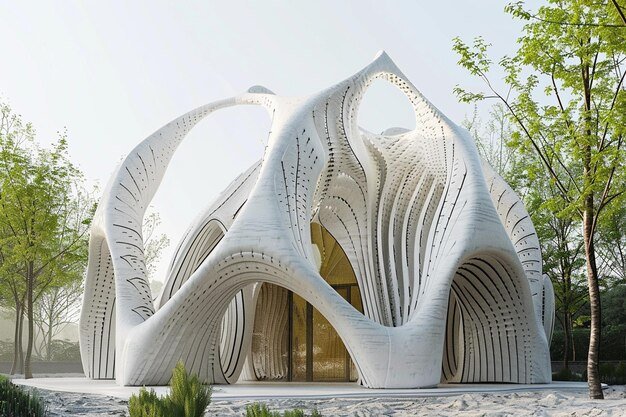
Step into a world where pixels dance to algorithms and words flow from neural networks, where the line between human ingenuity and machine capability blurs into a fascinating new frontier. This is The Art & Science of Generative AI Landscapes – a dynamic interplay of imagination and computation that’s reshaping how we create, innovate, and even think about intelligence itself. It’s a field exploding with possibility, moving beyond simple automation to sophisticated generation, offering tools that amplify human potential in ways once confined to science fiction.
At a Glance: Navigating the Generative AI Frontier
- What it is: Generative AI uses algorithms to create new, original content (text, images, audio, video, code, 3D models) that mimics patterns from its training data.
- The "Art": Focuses on creativity, expression, human-AI collaboration, and the aesthetic output, often driven by sophisticated "prompt engineering."
- The "Science": Underpins the models (like GANs, VAEs, Transformers, Diffusion Models), their training, and the computational power required.
- Key Applications: Revolutionizing creative industries, design, research, entertainment, and even scientific discovery.
- Ethical Considerations: Bias, copyright, authenticity, and responsible deployment are crucial discussions in this evolving landscape.
- Future Impact: Expect increasingly multimodal, personalized, and interactive AI capabilities that will integrate deeply into daily life and professional workflows.
Beyond the Hype: What Generative AI Really Means
Generative AI isn't just about making deepfakes or quirky images; it's a fundamental shift in how we approach creation. At its core, generative AI refers to a class of artificial intelligence models capable of producing novel content that hasn't been explicitly programmed. Unlike discriminative AI, which categorizes or predicts based on input (like identifying a cat in a picture), generative AI invents the cat. It learns the underlying patterns and structures within vast datasets – everything from millions of images to billions of lines of text – and then uses that understanding to synthesize entirely new examples.
Think of it not as a magic black box, but as an incredibly diligent apprentice. It observes, learns the nuances, and then begins to draw, write, or compose in its own distinct, yet informed, style. This capacity for invention is what makes the field so revolutionary, prompting artists, scientists, and businesses alike to delve deeper into what artificial intelligence can achieve.
The "Art" of the Landscape: Nurturing Creative Potential
The artistic side of generative AI is where the human element truly shines. While the algorithms do the heavy lifting of generation, the vision, direction, and refinement still largely fall to us. This isn't about AI replacing artists; it's about providing artists with an unprecedented toolkit. As Epstein and Hertzmann highlight in their paper "Art and the science of generative AI," the interaction between human and machine is central to the emerging creative process. It shifts the artist's role from solely making to largely guiding and curating.
Prompt Engineering: The New Brushstroke
At the heart of AI art is "prompt engineering" – the craft of communicating your creative intent to the AI through text commands. It's more than just typing a few words; it's understanding the model's capabilities, its biases, and how subtle phrasing, tone, and descriptive detail can drastically alter the output. A simple "sunset" might yield a generic image, but "A hyper-realistic sunset over a cyberpunk city, neon glow, intricate reflections on wet streets, high detail, volumetric lighting, 8k, cinematic, concept art by Syd Mead and HR Giger" tells a vastly different story.
This process is iterative. You prompt, you generate, you refine the prompt, you generate again. It’s a dialogue, a dance between your imagination and the AI's interpretation. This back-and-forth isn't just for images; it applies to generating complex narrative arcs, musical compositions, or even architectural designs. The artistry lies in the foresight to envision, the precision to describe, and the discernment to select and modify.
Human-AI Collaboration: A Symphony of Minds
Leading artists and designers are already embracing generative AI, not as a shortcut, but as a partner. They use AI to:
- Brainstorm and Ideate: Quickly generate hundreds of variations on a theme, exploring possibilities that would take weeks or months manually.
- Overcome Creative Blocks: When inspiration falters, AI can offer fresh perspectives or unexpected juxtapositions.
- Automate Tedious Tasks: Generate repetitive patterns, textures, or background elements, freeing up human time for core creative work.
- Explore New Aesthetics: Discover styles or visual languages that might not have emerged from traditional methods.
The result is often a hybrid artwork, where AI generates the raw material, and human hands and eyes refine, compose, and imbue it with personal meaning and intent.
The "Science" Beneath the Surface: How Generative Models Function
Behind every breathtaking AI-generated image or eloquent piece of text lies a complex tapestry of mathematical models and computational power. Understanding the basics of this science provides a deeper appreciation for the "art" it enables.
The Big Players: A Brief Technical Overview
While the field is constantly evolving, several foundational model architectures power most generative AI today:
- Generative Adversarial Networks (GANs): Introduced by Ian Goodfellow, GANs involve two neural networks, a "generator" and a "discriminator," locked in a continuous game. The generator tries to create realistic data (e.g., images), while the discriminator tries to distinguish between real data and the generator's fakes. Through this adversarial process, both improve, leading to increasingly convincing outputs.
- Variational Autoencoders (VAEs): VAEs learn to encode input data into a compressed "latent space" and then decode it back into its original form. The "variational" part allows them to generate new data by sampling from this latent space, producing variations that resemble the training data.
- Transformers (LLMs & Diffusion Models):
- Large Language Models (LLMs): Based on the Transformer architecture, these models excel at understanding and generating human language. They learn the statistical relationships between words and phrases, allowing them to predict the next word in a sequence with remarkable accuracy, leading to coherent and contextually relevant text generation.
- Diffusion Models: A relatively newer and incredibly powerful class, diffusion models work by learning to reverse a process of gradually adding noise to data. Imagine taking a clear image and slowly making it blurry or noisy. A diffusion model learns to do the opposite: starting from pure noise, it progressively denoises it, step by step, until a clear, high-quality image emerges. This iterative refinement process is why they produce such stunning and detailed visual outputs.
Training Data: The Fuel for Imagination
The quality and quantity of training data are paramount. Generative models learn from vast datasets—millions of images, billions of text tokens, hours of audio. These datasets are meticulously curated (though sometimes imperfectly, leading to biases) to teach the AI what "looks like" or "sounds like" or "reads like" the real world. Without this foundational learning, the AI wouldn't have the statistical understanding to create anything coherent. This robust training is what enables the sophisticated processing that underpins platforms that leverage generative AI.
Crafting Your Vision: Navigating the Generative AI Workflow
Ready to dive in? Here’s a practical framework for bringing your creative ideas to life with generative AI.
1. Define Your Intent & Outcome
Before you even touch a tool, clarify what you want to achieve.
- What's the purpose? Is it concept art, a story outline, a musical snippet, or a marketing visual?
- What style or aesthetic are you aiming for? Photorealistic, painterly, abstract, sci-fi, fantasy?
- What are your constraints? Time, budget, specific dimensions, content guidelines?
2. Choose the Right Tool for the Job
The landscape of generative AI tools is vast and growing.
- For Images: Midjourney, DALL-E 3, Stable Diffusion (often with local setups or web UIs like Automatic1111), Adobe Firefly.
- For Text: ChatGPT, Google Gemini, Claude, Llama.
- For Audio: Google Magenta Studio, AIVA, Amper Music.
- For Video/Animation: RunwayML, Pika Labs.
- For Code: GitHub Copilot, Google Gemini.
Each tool has its strengths, weaknesses, and unique prompting syntax. Don't be afraid to experiment.
3. Master the Art of Prompt Engineering
This is where your artistic input truly matters.
- Be Specific, Not Vague: Instead of "a forest," try "a dense, ancient redwood forest at dawn, with mist rising from the floor, hyper-realistic, golden hour light, cinematic."
- Use Keywords & Modifiers: Adjectives (hyper-realistic, surreal, whimsical), artistic styles (Impressionist, Cubist, Anime), lighting (volumetric, dramatic, soft), camera angles (wide shot, close-up, drone view), and even artists' names (concept art by Moebius, illustration by Studio Ghibli).
- Experiment with Negative Prompts: Tell the AI what not to include (e.g.,
--no blurry, text, cartoon). - Iterate and Refine: Generate, analyze, tweak your prompt, generate again. Small changes can have big impacts. Think of it as sculpting; you chip away and add until you get closer to your vision.
- Learn from Others: Observe prompts used by other creators. Many communities share their successful prompts.
4. Post-Generation Curation and Refinement
Rarely is the first output perfect. This stage involves human oversight.
- Selection: Choose the best generations that align with your vision.
- Editing/Inpainting/Outpainting: Use image editing software (Photoshop, GIMP) or AI tools (like Midjourney's Vary Region, or Stable Diffusion's inpainting/outpainting features) to fix imperfections, add details, or expand the canvas.
- Composition: Combine elements from multiple generations if needed.
- Storytelling: Integrate the AI-generated content into a larger narrative or design.
Beyond Image Generation: Diverse Generative AI Landscapes
While AI art has captured much of the public imagination, the generative AI landscape extends far beyond visual media.
Text: The Power of Words Unleashed
Large Language Models (LLMs) are transforming how we interact with information and create written content.
- Content Creation: Draft blog posts, marketing copy, social media updates, and even entire book chapters.
- Code Generation: Assist developers by writing code snippets, debugging, or translating between programming languages.
- Summarization & Translation: Condense lengthy documents or translate content across languages with impressive fluency.
- Creative Writing: Generate poetry, song lyrics, dialogue, or elaborate story premises.
Audio: Composing the Future
AI can now create original music, synthesize voices, and generate sound effects.
- Music Composition: Generate royalty-free background music for videos, brainstorm melodic ideas, or even create entire symphonies in specific styles.
- Voice Synthesis: Create realistic voiceovers for audiobooks, podcasts, or virtual assistants, including different accents and emotional tones.
- Soundscapes: Generate ambient sounds for games, films, or immersive experiences.
Video & 3D: Dynamic Worlds and Immersive Experiences
The ability to generate moving images and three-dimensional models is unlocking new possibilities in entertainment, design, and virtual reality.
- Synthetic Media: Create short video clips, animate characters, or even produce entire "deepfake" videos (which also raise significant ethical concerns).
- 3D Model Generation: Design prototypes, architectural renderings, or assets for video games and virtual environments at speed. Imagine being able to explore AI desert coasts that exist only in digital form, crafted with intricate detail.
- Virtual World Building: AI can populate virtual environments with realistic objects, landscapes, and even non-player characters.
The Ethical Canvas: Responsibility in Creation
As generative AI becomes more powerful and accessible, the ethical considerations surrounding its use grow more pressing. Navigating this landscape requires careful thought and a commitment to responsible innovation.
Bias in Data, Bias in Output
Generative models learn from the data they're fed. If that data reflects societal biases (e.g., underrepresentation of certain demographics, stereotypes), the AI will perpetuate and even amplify those biases in its creations. This can lead to AI-generated images that reinforce harmful stereotypes or language models that produce discriminatory text. Addressing bias requires diverse, carefully curated datasets and ongoing auditing of model outputs.
Copyright, Ownership, and Attribution
Who owns the AI-generated artwork? Is it the person who wrote the prompt, the company that developed the AI, or even the original artists whose work was used in the training data? These are complex legal questions with no clear answers yet. Many jurisdictions are grappling with how to apply existing copyright laws to AI creations. For creators, it's crucial to understand the terms of service of the AI tools they use and to be transparent about AI's involvement in their work.
Authenticity and Deepfakes
The ability to generate hyper-realistic images, audio, and video raises concerns about authenticity. Deepfakes, while having potential for creative applications, also pose risks for misinformation, fraud, and reputational damage. Developing robust detection methods and promoting media literacy are vital countermeasures. The ethical imperative is to use these powerful tools responsibly, ensuring transparency and preventing malicious use.
Environmental Impact
Training large generative AI models requires significant computational power, which translates to substantial energy consumption and carbon emissions. As models grow larger and more numerous, their environmental footprint becomes a critical concern. Researchers are working on more energy-efficient algorithms and hardware, but awareness of this impact is important for anyone leveraging these technologies. Businesses need to consider the broader implications of utilizing artificial intelligence in business, including its environmental costs.
Demystifying the Hype: Common Questions & Misconceptions
The rapid ascent of generative AI has led to many questions and, understandably, some misunderstandings. Let's clear the air.
"Will AI Replace Human Artists?"
This is perhaps the most common question, and the answer is a resounding no – not in the way many fear. AI won't replace human creativity, empathy, or the unique spark of individual experience. Instead, it will change the nature of artistic work, much like the camera changed painting or synthesizers changed music. Artists who embrace AI as a tool will likely find new avenues for expression, while those who resist might find themselves at a disadvantage. It's an augmentation, not a replacement.
"Is AI Art 'Real' Art?"
The definition of "art" has always evolved with technology. Photography was once questioned; digital art faced skepticism. AI art, when guided by human intent, vision, and selection, absolutely possesses artistic merit. It's a new medium, a new form of expression. The critical element isn't how it's made, but the intention, the message, and the impact it has on the viewer. The craft now includes prompt engineering and curation, rather than just brushstrokes or chisel marks.
"Do I Need to Be a Coder to Use Generative AI?"
Absolutely not! Most cutting-edge generative AI tools are designed with user-friendly interfaces, often web-based, requiring no coding knowledge. Platforms like Midjourney, DALL-E 3, and ChatGPT are accessible to anyone who can type a prompt. While understanding some of the underlying science can be helpful, it's certainly not a prerequisite for creation. This democratization of powerful tools is one of the most exciting aspects of the field. Anyone can experience the benefits of generative AI.
"Is Generative AI Just Copying What's Already There?"
While generative AI learns from existing data, it doesn't simply copy and paste. It extracts patterns, relationships, and underlying structures, then synthesizes new content based on those learned principles. Think of it like a chef who learns hundreds of recipes and then invents a completely novel dish by combining techniques and flavors in a unique way. The output is original, albeit inspired by its training.
The Horizon Unfolds: Future Trends in Generative AI Landscapes
The field of generative AI is moving at an incredible pace. What might we expect in the coming years?
Multimodal Models: Beyond Single Senses
Current models often specialize in one domain: text, images, or audio. The future is multimodal, where AI can understand and generate across different types of data simultaneously. Imagine describing a scene, and the AI generates not just the image, but also the accompanying music, dialogue, and even a basic 3D model for a virtual environment. This integrated creative process promises richer, more immersive experiences.
Personalized Generation: Tailored to You
Expect AI to become increasingly adept at understanding individual preferences and generating content highly personalized to a user's style, needs, or emotional state. From personalized news feeds to custom-designed clothing, AI will adapt to our unique tastes, offering truly bespoke digital experiences.
Real-time Interaction: Creative Co-Pilots
The delay between prompt and generation is already shrinking. Soon, we'll see more real-time, interactive generative AI that acts as a true creative co-pilot. Imagine sketching a few lines and having the AI instantly complete a detailed landscape, or humming a tune and having it instantly compose an orchestral arrangement. This instantaneous feedback loop will accelerate creative workflows.
Accessibility and Democratization: Tools for Everyone
As the technology matures, it will become even more accessible and affordable, bringing powerful creative tools to a broader audience. This democratization of creation will empower individuals and small businesses to produce high-quality content that was once the exclusive domain of large studios or highly skilled specialists. This makes it an accessible generative AI technology for all.
Shaping Tomorrow's World, One Prompt at a Time
The Art & Science of Generative AI Landscapes is more than just a technological marvel; it's a cultural phenomenon that challenges our perceptions of creativity, authorship, and intelligence. It invites us to engage with machines not merely as tools, but as collaborators, pushing the boundaries of what's possible.
For you, whether you're an artist, an entrepreneur, a researcher, or simply a curious mind, the call to action is clear: lean in. Experiment with the tools, understand the underlying principles, engage in the ethical discussions, and most importantly, bring your unique human perspective to this burgeoning field. The future of creation is a partnership, and your voice, your vision, and your ethical compass are more critical than ever in shaping the incredible, unfolding landscapes of generative AI.